What to eat in Annecy
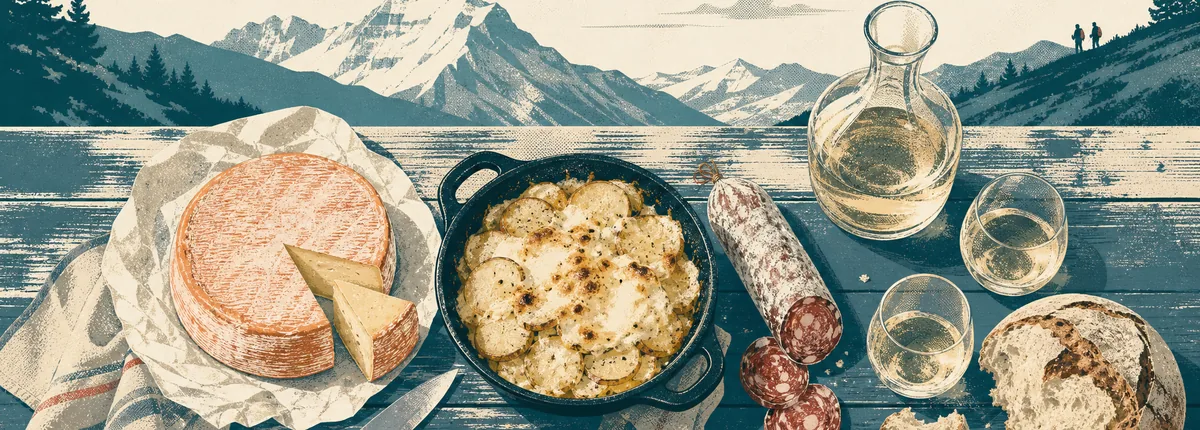
The cheese, which is the whole point
Savoie and Haute-Savoie are cheese country, and almost every dish worth ordering here is a delivery mechanism for it. Reblochon is the soft, washed-rind one you will see most; tomme de Savoie is the firmer, greyer-rinded everyday cheese; beaufort and abondance are the hard alpine wheels that carry a fondue. You do not need to understand the differences to enjoy a cheese board, but you will taste them on one.
A cheese board is also, quietly, the best-value order in a lot of places here, and it travels — a wedge from a market stall plus bread is a lakeside lunch for a fraction of a restaurant bill.
The three dishes everyone comes for
Tartiflette is potatoes, onions, lardons and reblochon baked until the top goes brown. It is enormous. Fondue savoyarde is melted hard cheese and white wine in a pot, eaten with bread on long forks, and it is ordered for the table rather than for one. Raclette is a half-wheel melted at the table and scraped onto potatoes, charcuterie and pickles, and it goes on for as long as you let it.
All three are winter food. They are on menus in July because visitors ask for them in July, but ordering a fondue at 28 °C is a decision you make once. If you are here in summer and want the Savoyard experience anyway, have it at lunch on a cloudy day, or wait until you are back for the season it was built for.
These dishes are portioned for people who have been outside all day in the cold. If you have spent the afternoon on a boat, one tartiflette between two is not a joke — it is the correct order.
Charcuterie and the mountain end of the menu
Diots are the local Savoyard sausages, usually cooked in white wine and often served with potatoes or lentils. Cured hams and dried sausages turn up on every board. Croziflette swaps the potatoes of a tartiflette for crozets, the small square buckwheat pasta of the region, and is marginally less heavy, which is a low bar honestly cleared.
Fish, which is what to eat in summer
Menus around the lake list alpine freshwater fish — féra and omble chevalier most often, usually pan-fried and served simply. This is the summer answer to the cheese problem: it is light, it belongs here, and it is what a table on the water was made for.
One honest caveat. “From the lake” on a menu is a phrase, not a certification, and you have no practical way to verify it from your chair. If it matters to you, ask, and judge the answer by how specific it is.
The market, and the cheapest good meal in town
The Old Town market is the reason a picnic beats a restaurant here more often than it should. Cheese, charcuterie, bread and fruit assembled at a stall and eaten on Le Pâquier or on a beach is a better lunch than most canal-side terraces will sell you, at a fraction of the price, with the view included.
The pastry end is worth a stop too, and early is better: the Old Town bakeries at eight in the morning are the version of this town that residents actually use.
Where this page stops
No restaurant is named on this site, here or anywhere else. Nothing is recommended that has not been checked, restaurants in a tourist core change hands and change kitchens faster than any guide keeps up with, and a stale recommendation is worse than none. What holds is the structural advice: the tables with the best canal view are reliably the worst value, and three streets back changes both the price and the cooking.
 Many tastings
No Diet Club: Food Tour of Annecy with Many Tastings
 Full meal
Annecy: Small-Group Food Tour with a Local and a Full Meal
 60 minutes
Annecy: Express Walk with a Local in 60 Minutes
If you would rather have somebody local do the choosing, that is what a food walk is for — the point of one is not the eating but the sorting, and it is a decent first evening.
Can’t make these dates?
Browse more tours and activities in Annecy and find one that fits your schedule — all with instant confirmation and free cancellation.
Frequently asked questions
What food is Annecy known for?
Savoyard mountain cooking: tartiflette, fondue savoyarde and raclette, all built around local cheeses such as reblochon, tomme de Savoie, beaufort and abondance. Alpine freshwater fish and Savoyard charcuterie fill out the rest of the menu.
What is tartiflette?
Potatoes, onions and lardons baked under reblochon cheese until the top browns. It is rich, enormous and designed for a cold day — a single portion between two people is a perfectly reasonable order in summer.
Should you eat fondue in Annecy in summer?
You can, and menus will happily sell it to you, but it is winter food. In warm weather the better order is freshwater fish, charcuterie, or a cheese board and bread eaten outside. Save the fondue for a cold or cloudy day.
What fish do they eat in Annecy?
Féra and omble chevalier are the alpine lake fish you will see most often, usually pan-fried and served plainly. Bear in mind that “from the lake” on a menu is a description rather than a certification.
Is eating out in Annecy expensive?
It depends almost entirely on where you sit. Canal-view tables carry a view surcharge and are rarely the best cooking in town. Three streets back is a different price bracket, and a market picnic beats both for value.