Is Annecy safe?

What this page will not tell you
No crime statistic appears below. This site publishes numbers it has checked against a named source and nothing else, and a confident-sounding figure lifted from an aggregator is exactly the kind of thing that spreads because it sounds precise. If you want data, the French Ministry of the Interior publishes departmental figures for Haute-Savoie and they are the source to read.
What follows instead is the practical version: the situations in which visitors to this particular town get into difficulty.
The lake is the real risk
Lake Annecy is 82 metres deep at its deepest and 41 metres deep on average, and it is fed by alpine water including an underwater spring at the bottom. The surface reaches around 22 °C in high summer. Two metres down it does not.
That temperature gradient is what gets people. Cold-water shock is a genuine hazard in a lake this deep, particularly for someone who has been lying in the sun and goes straight in, and particularly away from a supervised beach. The advice is unglamorous and it works: swim from the supervised town beaches in season, get in gradually, and do not swim out to a distant buoy to prove something after lunch.
Boat traffic is the other lake hazard people underestimate. If you swim beyond the marked zones you are in a shipping lane used by fast private boats whose drivers are not looking for a head in the water. Stay inside the buoys.
Mountain weather, including on flat ground
Annecy gets around 1,600 mm of precipitation a year and summer thunderstorms are normal rather than exceptional. Storms here build fast and arrive over a ridge with very little warning from where you are standing.
The consequence for a visitor is mostly about timing. Do the exposed things — the ridges, the summit of Le Semnoz, a long stretch of open shoreline — in the first half of the day, which is also when the air is clearest. Late afternoon in July is when the sky does something.
Adventure sports: the part worth being fussy about
Paragliding and canyoning are the two things most visitors book here, and both are run commercially and safely by operators who do this every day. The Col de la Forclaz handles up to 200 flights a day in high season and the launch is equipped by the commune and the French free-flight federation; it is busy because it works.
Two things to insist on. First, that the briefing happens in a language you actually follow — see the language page. Second, that a cancellation for weather is treated as normal. Wind and cloud stop flights, and rain stops canyons. An operator who is relaxed about calling it off is the operator you want; one who is keen to fly you in marginal conditions is not.
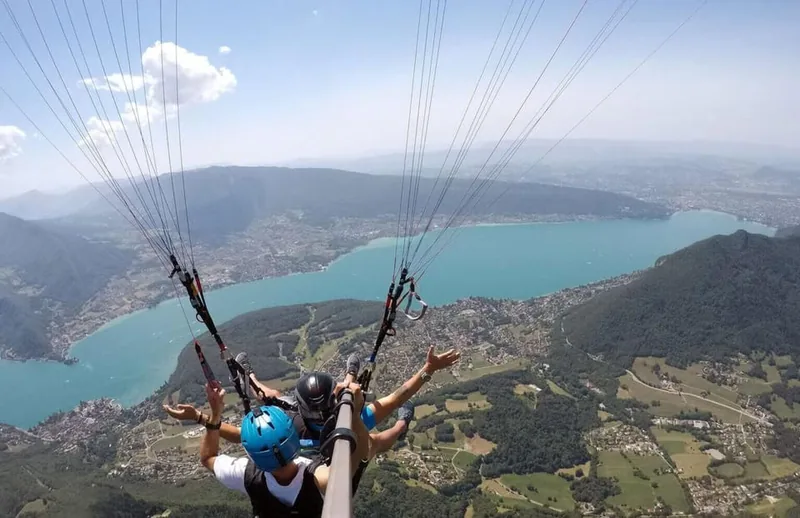 Lake launch
Annecy: Introductory Paragliding Flight over the Lake
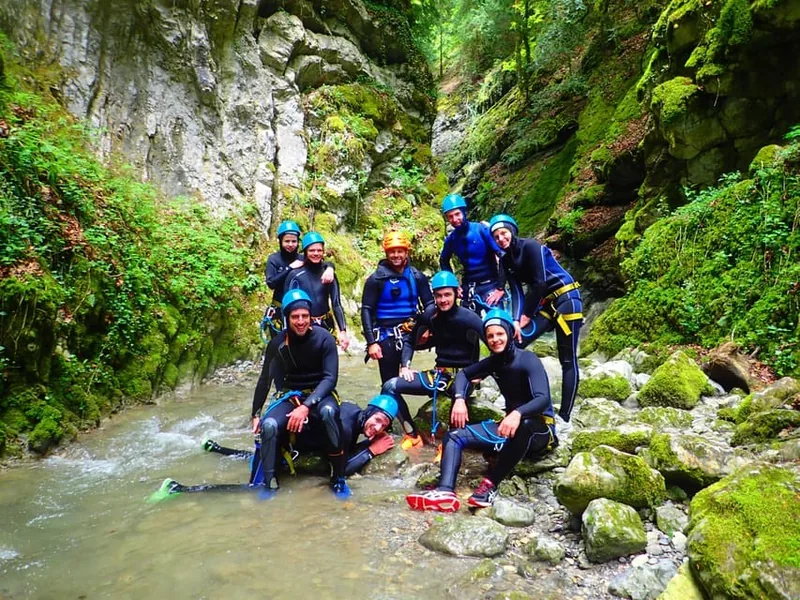 Best seller
Talloires: Guided Canyoning Experience in Angon Canyon
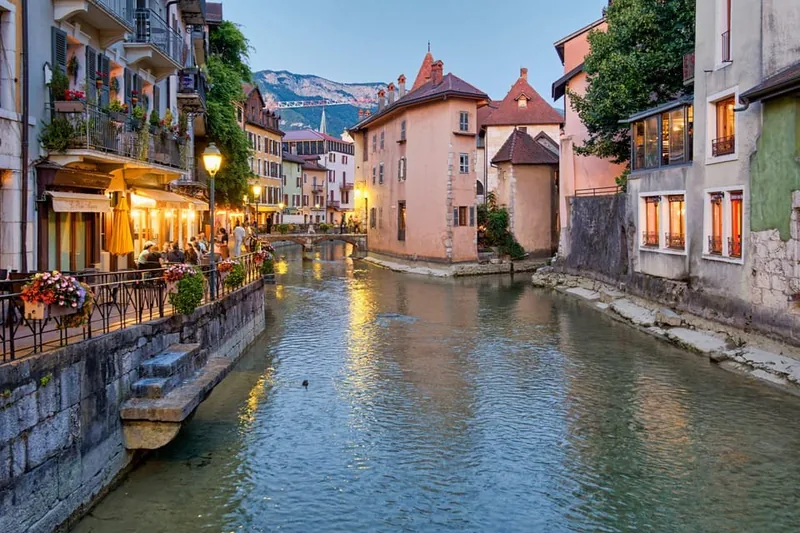 Walk and boat
Annecy: Old Town Guided Walking Tour & Scenic Lake Cruise
In town
The Old Town is a compact, busy, pedestrianised tourist centre, and it behaves like one. Pickpocketing risk concentrates where crowds do — the market, the narrowest lanes at peak hour, and the town during the animation festival in June, when the population temporarily multiplies. Keep a bag closed and in front of you in a crush and you have dealt with it.
Do not leave anything visible in a parked car, particularly at trailhead and beach car parks outside town, which are quiet in exactly the way that suits a car break-in. This is the single most common way a visitor to a French mountain area loses something.
Practical bits
- Emergency number: 112 anywhere in the EU, from any phone.
- Tap water is safe everywhere in town — see why.
- The cycle path is shared with walkers, runners, children and skaters. Most incidents on the Voie Verte are riders treating it as a training circuit. It is not one.
- Driving: the Old Town is pedestrianised, and Parking Courier has a 1.95 m height limit that regularly strands vans and roof-boxed cars.
Solo and family travel
Annecy is an easy place to be alone in: small, walkable, well lit in the centre, and busy in the evening without being rowdy. It is also an unusually easy family destination — free supervised beaches, a flat traffic-free cycle path, short distances between everything, and free museum entry for under-12s. The supervision at the town beaches is seasonal, which is worth knowing if you are visiting with small children outside the summer months.
Can’t make these dates?
Browse more tours and activities in Annecy and find one that fits your schedule — all with instant confirmation and free cancellation.
Frequently asked questions
Is Annecy safe for tourists?
Yes, by the standards of European travel it is a comfortable place to visit, and normal precautions in busy tourist areas are enough. The risks that actually catch visitors out here are outdoor ones — the cold deep lake, fast-moving mountain weather and adventure sports.
Is it safe to swim in Lake Annecy?
Yes, from the supervised town beaches in season. The lake is 82 metres deep and the surface warmth is misleading, so get in gradually rather than diving in after sunbathing, and stay inside the marked zones because boat traffic outside them is fast.
Is paragliding in Annecy safe?
It is run commercially every day by operators using a launch equipped by the commune and the French free-flight federation, and the site handles up to 200 flights a day in high season. Insist on a briefing in a language you follow, and treat a weather cancellation as a good sign.
Is Annecy safe at night?
The centre is compact, well lit and busy in the evening without being rowdy, and it is an easy place to walk alone. The usual advice about quiet, unlit lakeside stretches away from town applies here as anywhere.
Is Annecy safe for families?
It is unusually good for families — free supervised beaches, a flat traffic-free cycle path, short distances and free museum entry for under-12s. Note that beach supervision is seasonal, so it is not in place outside the summer months.