Lake Annecy facts: size, depth and why the water is like that
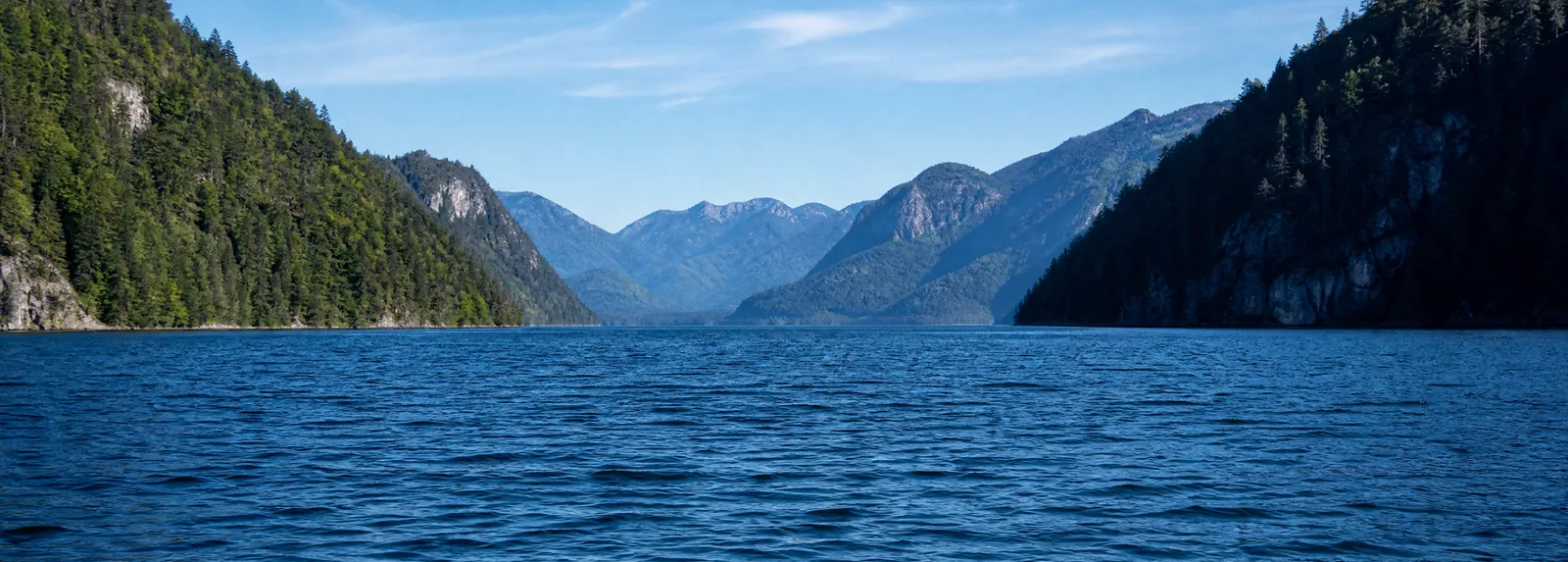
The lake in figures
Third-largest, not the largest
Lake Annecy is the third-largest lake lying entirely within France, after Lac du Bourget and Lac de Grand-Lieu. Lake Geneva is much larger but is shared with Switzerland, which is where a lot of the confusion in this ranking comes from. On surface area alone Annecy is modest — the reason it is famous has nothing to do with size.
Why it is so clean
You will see Lake Annecy described as the cleanest lake in Europe. That claim is made often enough by tourism bodies that it is worth attributing rather than asserting: it is what is said about the lake, and the underlying story is better than the slogan.
In the late 1950s this lake was dying. It was eutrophic and the wildlife was going. In July 1957 SILA was created specifically to save it, and between 1961 and 1976 a ring of sewage collectors was built around the entire shoreline, taking wastewater to a treatment plant downstream at Cran-Gevrier. Since then nothing has gone into the lake. Continuous scientific monitoring has run since 1966. The water you swim in is the result of seventy years of deliberate engineering, not of altitude or luck. The full account is here.
The same infrastructure is why you can drink from the tap and swim off a town beach on the same afternoon. The lake supplies drinking water to more than 200,000 people, which is an unusual thing for a lake anyone is allowed to swim in.
The Boubioz spring
At the deepest point, 82 m down, an underwater spring called the Boubioz feeds the lake from below. It is one of the reasons the lake’s water renews as well as it does, and it is the sort of detail that explains why the temperature stratifies so sharply — a warm surface layer in August sitting on cold water that never really changes.
Temperature and depth
Surface temperature in July and August sits around 22 °C. Published figures range from about 22 to 24 °C, and one month-average dataset gives 21.5 °C for August with a recorded range of 17 to 26 °C, so “around 22” is the honest number rather than a precise one. Below the surface layer it is cold in every month. The beaches page covers what that means in practice.
The town, for scale
Annecy itself had 134,985 residents at 1 January 2026, making it France’s 28th-largest commune. The wider Grand Annecy area covers 34 communes and 515 km² with around 213,000 people. The town as it exists now dates from a 2017 merger that folded Annecy-le-Vieux, Cran-Gevrier, Meythet, Pringy and Seynod into the old commune — which is why population figures published before and after 2017 look so different.
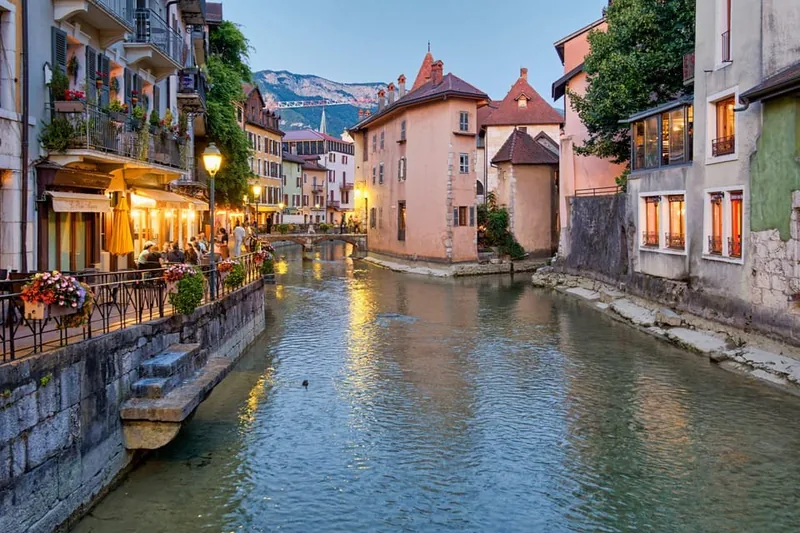
The lake drains through the Thiou, a 3.6 km river that runs straight through the Old Town and past the Palais de l’Île before joining the Fier and eventually the Rhône. The canals everyone photographs are the lake leaving.
 Walk and boat
Annecy: Old Town Guided Walking Tour & Scenic Lake Cruise
 Lake launch
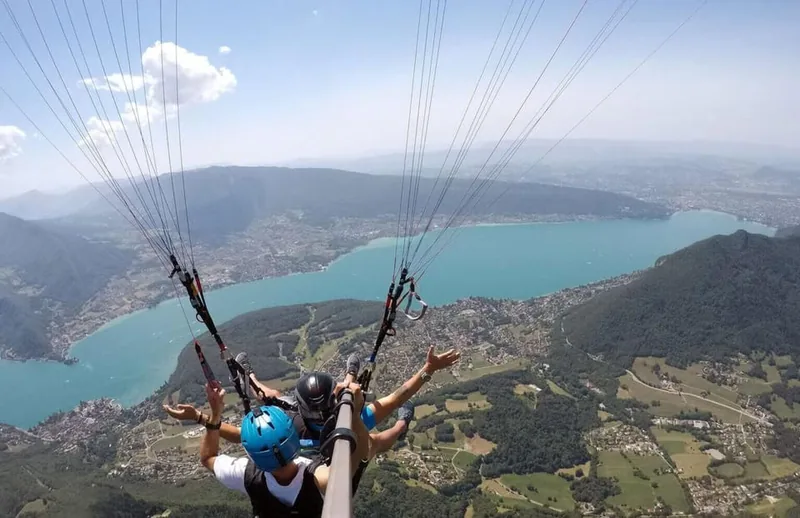
Annecy: Introductory Paragliding Flight over the Lake
 Rental
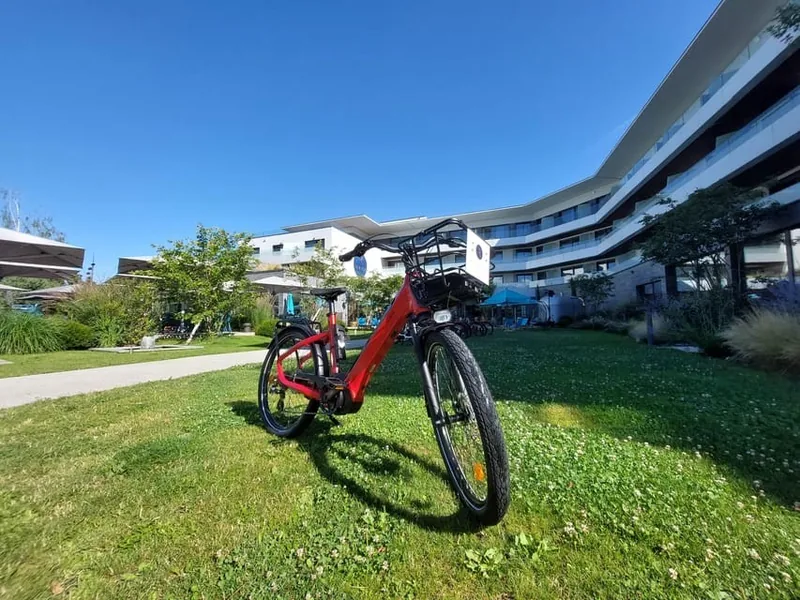
Annecy-le-Vieux: Electric and Classic Bike Rental
Can’t make these dates?
Browse more tours and activities in Annecy and find one that fits your schedule — all with instant confirmation and free cancellation.
Frequently asked questions
How deep is Lake Annecy?
82 m at its deepest point, with a mean depth of 41 m. An underwater spring called the Boubioz feeds the lake at that deepest point.
How big is Lake Annecy?
27.59 km² of surface, 14.6 km long and 3.2 km at its widest. A full circuit of the shore by road is about 40 km.
Is Lake Annecy the cleanest lake in Europe?
That is the claim commonly made for it, and it rests on real engineering: a ring of sewage collectors built between 1961 and 1976 means no wastewater has entered the lake in fifty years, and monitoring has run continuously since 1966.
How was Lake Annecy formed?
By glaciers, roughly 18,000 years ago, as the ice retreated at the end of the last glacial period. It sits at 446.97 m above sea level and holds about 1,124.5 million cubic metres of water.
Is Lake Annecy the largest lake in France?
No — it is the third-largest lying wholly within France, after Lac du Bourget and Lac de Grand-Lieu. Lake Geneva is larger but is shared with Switzerland.
What river flows out of Lake Annecy?
The Thiou, 3.6 km long, which runs through Annecy’s Old Town past the Palais de l’Île and joins the Fier, and from there the Rhône. The Old Town canals are that outflow.