Musée-Château d’Annecy: the castle of the counts of Geneva
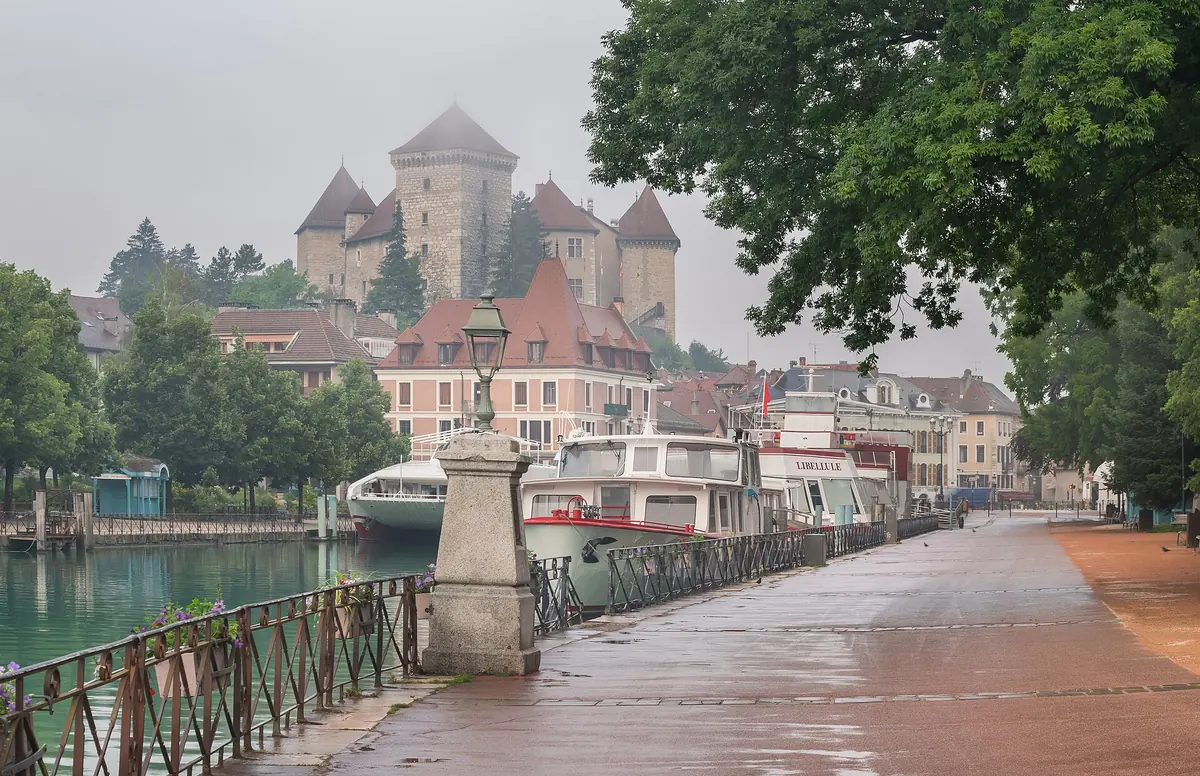
What it is
The château is the reason the Old Town is where it is. A fortified rock overlooking a river crossing at the head of a lake is a good place to put a castle, and the counts of Geneva put theirs here. Annecy grew up underneath it, along the Thiou, and the relationship between the two is still legible from the courtyard: you look straight down onto the roofs of the town the castle existed to control.
Today it belongs to the town and holds the municipal museum. The collections run across regional and alpine history, fine art with a strong local emphasis, and — the part most visitors do not expect — the archaeology of the lake itself, including material from the prehistoric lakeside settlements around its shores. If you have any interest in why there are people living beside this water at all, that section is the answer.
Prices, and the free Sunday
Full-price admission is EUR 6.50 from 1 September to 30 June and EUR 7.00 from 1 July to 31 August. The reduced rate is EUR 3.50 and EUR 4.00 for the same periods. Under-12s go free, as do teachers and Pass’Région holders. A combined ticket with the Palais de l’Île works out at around EUR 8 to 9 — buy that if you are seeing both, because it is barely more than the château alone.
Entry is free on the first Sunday of the month from October to May. That is a real saving if your trip falls in the shoulder or winter season, and it is not well advertised.
Walk up the ramp even if you have no intention of paying to go in. The courtyard is open, the view back over the Old Town roofs and out to the lake is the best free viewpoint in Annecy, and it costs nothing. The five minutes of steep cobbles is the entire admission price.
Opening days — and why this page will not print a timetable
Two reputable sources disagree about when the château opens. The tourist office describes it as open daily except a short list of public holidays — 1 January, Easter Monday, Ascension, 1 and 8 May, 1 and 11 November, and 25 December. A secondary source says it closes on Tuesdays and gives split winter hours.
Rather than pick one and sound confident, here is the honest version: it is broadly open through the week, it keeps longer continuous hours in summer than in winter, and it closes on French public holidays. Check the museums service’s own page for the day you are going. A wasted walk up that ramp is a genuinely annoying way to lose twenty minutes, and no guide — including this one — is worth trusting over the official schedule on the morning itself.
How long to allow, and what to pair it with
Most visitors spend an hour to ninety minutes inside. The natural sequence is the Old Town and the Palais de l’Île first, then the ramp, then back down and out to the lake for the afternoon — which is exactly how the one-day route is built. The two museums are about 130 m apart as the crow flies, though the ramp between them makes that feel further than it measures.
Next: Palais de l’Île · 15 things to do · the one-day route
Frequently asked questions
How much is the Musee-Chateau d'Annecy?
Full price is EUR 6.50 from 1 September to 30 June and EUR 7.00 from 1 July to 31 August. Reduced entry is EUR 3.50 and EUR 4.00. Under-12s, teachers and Pass'Region holders are free, and a combined ticket with the Palais de l'Ile is around EUR 8 to 9.
Is the Musee-Chateau free on Sundays?
On the first Sunday of the month from October to May, yes. That does not apply in the summer months.
Can you visit the chateau courtyard without a ticket?
Yes. The ramp and the courtyard are open, and the view from there over the Old Town roofs and the lake is free. You only pay to enter the museum rooms.
What is inside the Musee-Chateau?
The town museum: regional and alpine history, fine art with a local emphasis, and the archaeology of Lake Annecy including material from the prehistoric lakeside settlements. Most people spend an hour to ninety minutes.
Is the Musee-Chateau open every day?
Sources disagree on the weekly pattern, so check the museums service's own schedule for your date. It is broadly open through the week with longer continuous hours in summer, and it closes on French public holidays.